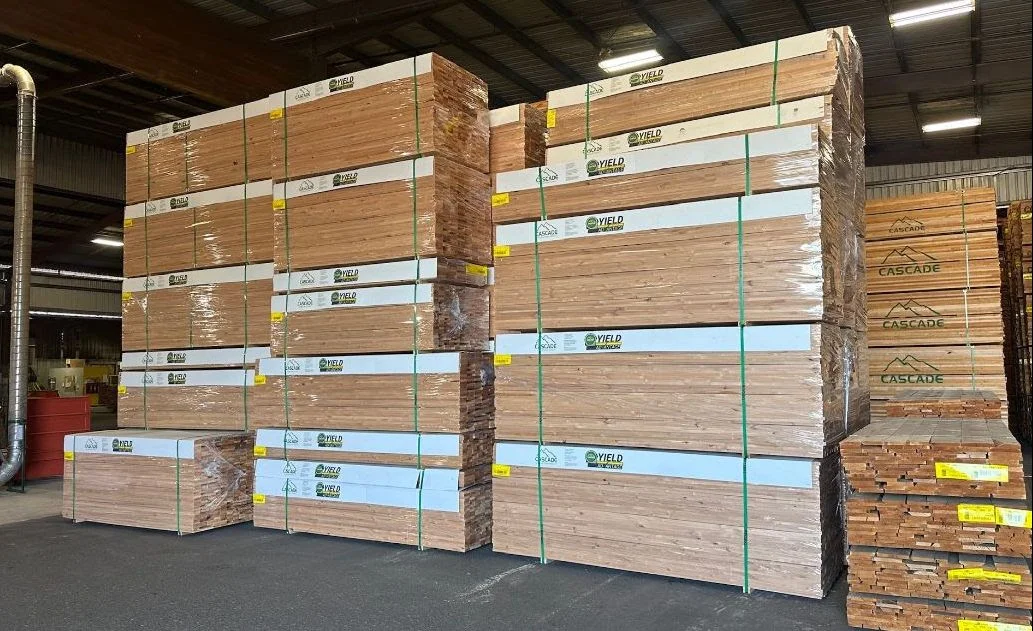
Ripped-to-Width and Sorted-to-Width Interest Continues to Expand
Feb 11, 2026
Return

Cascade’s New Rip Line Strongly Positions Us For Future Growth
The U.S. hardwood lumber industry is experiencing a major shift as downstream buyers increasingly prefer ripped-to-width (RTW) and sorted-to-width (STW) products over traditional random width and length (RWL) lumber. At the recently completed Indiana Hardwood Lumber Association convention, a large number of producers asked about our new line at Cascade Hardwood and what it was doing for us.
Manufacturers in furniture, cabinetry, and mouldings face ongoing labor shortages, higher costs, and pressure to adopt lean, just-in-time processes. They now seek lumber pre-ripped to exact widths, like 3-3/4″ or 4-7/8″, etc. or lumber sorted into uniform groups. This eliminates in-house ripping, cuts waste, speeds production, and simplifies inventory. Demand is growing for additional features such as S4S (surfaced on four sides), even precise sorting than the traditional 1” spread, and fast delivery to support efficient operations.
Mills investing in advanced ripping lines, laser-guided sorters, automation, and yield-optimization software gain clear advantages. This is exactly what we have done at Cascade. These systems produce higher-value lumber that commands premium prices while slashing waste, often to under one inch per board, and reducing labor needs. Fixed costs from equipment provide predictability and scalability, replacing variable expenses tied to inefficient processing. These producers align perfectly with buyer priorities: lower freight costs (shipping only usable material), minimal waste disposal, and quicker turnaround.
In contrast, producers sticking to RWL face tough headwinds. Overall demand for standard grades has weakened over the past few years, making inventory harder to sell and byproducts challenging to move. We continue to have customers say in some way, “I don’t care what the rules state, this is what I need!” Without customization, manufacturers forfeit premium pricing, incur higher relative costs from excess shipping and waste, and struggle with inefficiencies. Amid historically low hardwood production and ongoing sawmill closures, RWL-focused operations risk consolidation and declining relevance.
Into 2026, forecasts show flat-to-modest demand growth overall, but tighter supply in key regions and expected price increases of for many hardwoods. In this selective market, RTW/STW-equipped mills are set to thrive by meeting evolving needs and securing value-driven growth. Traditional RWL producers, however, face the real threat of being left behind.
The takeaway is straightforward: invest in modern processing capabilities now to stay competitive, or risk fading in an efficiency-first era. This is exactly what we have done at Cascade.