
Return
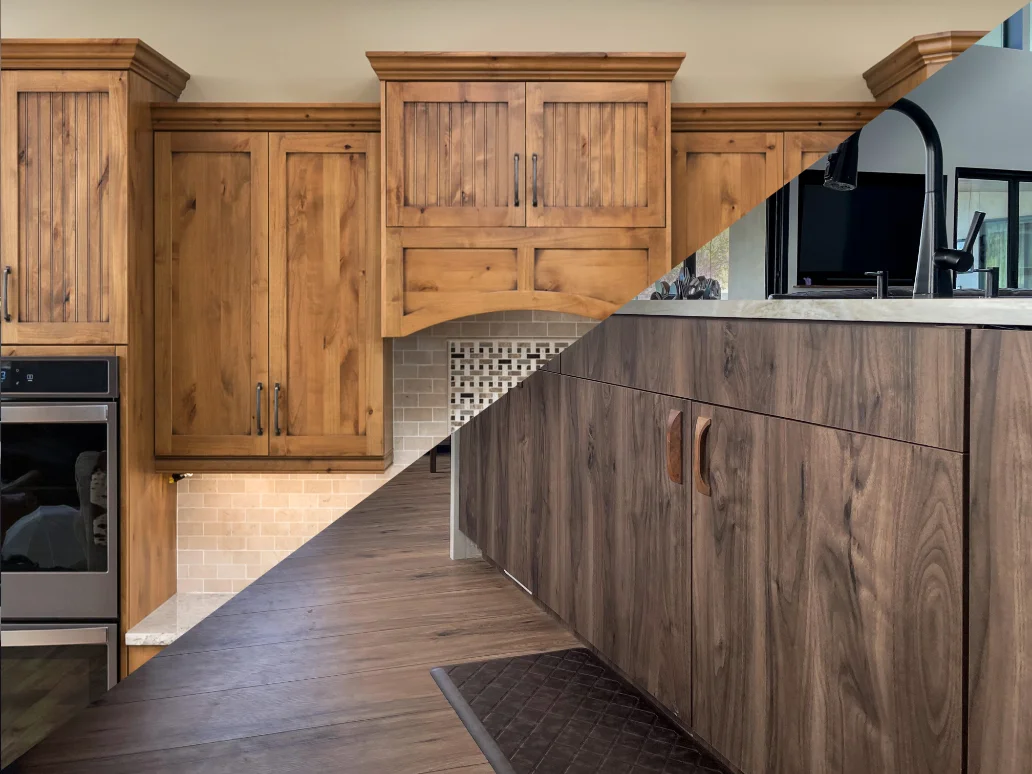
Why Veneer Makers Struggle Against Laminate Illusions
In the world of interior design and furniture, the battle between authenticity and imitation rages on. Thermally fused laminate (TFL) has surged in popularity, offering budget-friendly surfaces that mimic wood grains with uncanny realism. But for veneer manufacturers and distributors, this poses a thorny challenge: how do you compete when consumers pit your natural product against a synthetic one that’s engineered for flawlessness?
TFL is essentially a high-resolution print of wood patterns, often derived from photographs of just 10 or so “perfect” wood samples. These images are scanned, digitized, and repeated across panels, creating uniform, defect-free surfaces. No knots, no color variations, no surprises, just consistent beauty. Real wood veneers, on the other hand, are sliced from actual logs. Each sheet tells a unique story: subtle grain differences, natural imperfections like mineral streaks or burls, and tonal shifts that reflect the tree’s growth. This variability is what makes wood genuine, but it’s also a vulnerability in a market craving predictability.
The core challenge? Consumer expectations. Shoppers scrolling online or browsing showrooms often compare side by side, favoring TFL’s photoshopped perfection over wood’s organic quirks. “Why pay more for something that doesn’t match exactly?” they ask. For manufacturers, this means educating buyers on value, real veneers offer depth, tactility, and aging grace that laminates can’t replicate. Yet, misinformation abounds: many assume TFL is “just as good,” ignoring its susceptibility to chipping or fading under wear.
Distributors face inventory headaches, also. Sourcing consistent veneers requires skilled matching from logs, driving up costs. A single mismatched batch can lead to returns, eroding trust. Meanwhile, TFL rolls out endlessly identical, slashing production expenses and appealing to mass-market furniture giants.
To thrive, the industry must pivot. Emphasize storytelling: market veneers as sustainable, heirloom-quality investments. Utilize technology like 3D scanning for enhanced previews or certifications that highlight eco-friendliness. Ultimately, it’s about shifting perceptions—from chasing uniformity to celebrating nature’s artistry. In a cookie-cutter world, real wood’s imperfections might just be its superpower.
