
Rising Freight Costs and the Alder Supply Chain
Jul 14, 2026
Return
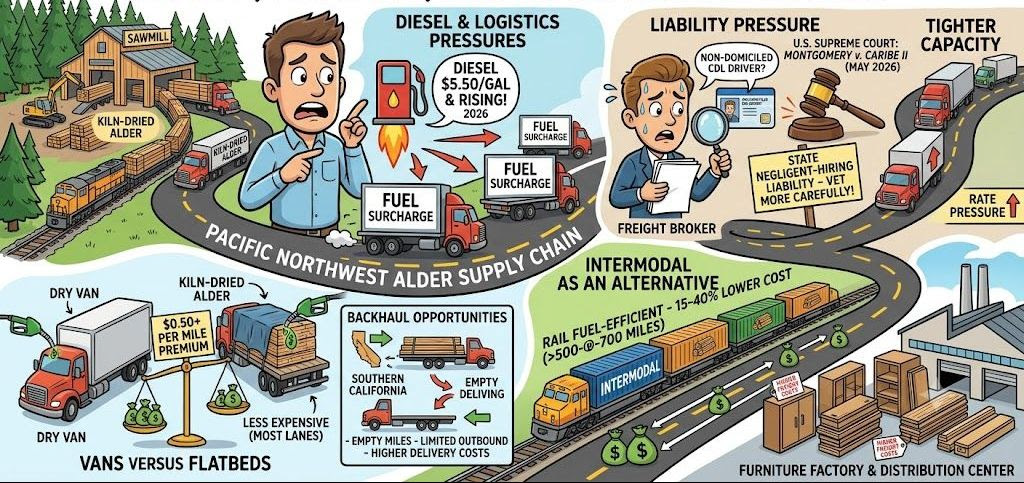
Diesel, Liability, and Logistics Pressures
Pacific Northwest Alder continues to serve cabinetry, moulding, and specialty trim markets well because of its warm tones, consistent grain, and workability. Getting kiln-dried lumber from the mill to manufacturers and distributors, however, has grown more expensive amid higher diesel prices and new legal developments affecting trucking.
National on-highway diesel prices have climbed in 2026, recently averaging around $5.50 per gallon. Fuel accounts for a major portion of carrier operating costs, so these increases quickly translate into higher fuel surcharges on both flatbed and dry van loads.
The U.S. Supreme Court’s unanimous decision in Montgomery v. Caribe Transport II (May 2026) adds further pressure. The Court ruled that freight brokers can face state negligent-hiring liability when selecting carriers, including those using non-domiciled CDL drivers. Brokers are now vetting more carefully, which is tightening capacity in some lanes and contributing to upward rate pressure as compliance and insurance costs rise.
Vans versus flatbeds for lumber. Dry van loads of kiln-dried Alder are generally less expensive than flatbed for most lanes. Flatbeds typically carry a premium of $0.50 or more per mile because of specialized securing, tarping, and handling. Both modes, however, feel the impact of higher diesel and tighter capacity.
Freight Rates Depend Heavily on Backhaul Opportunities
Regions with strong outbound freight enjoy lower inbound costs. Southern California, for instance, has limited outbound flatbed freight, which increases empty miles and makes inbound deliveries to the area significantly more expensive.
Intermodal as an Alternative
For medium- to long-haul routes, intermodal containers and rail service can deliver meaningful savings. Rail is far more fuel-efficient than trucking and often delivers 15–40% lower costs on distances beyond 500–700 miles once drayage is included. Many lumber shippers are shifting portions of volume to intermodal to help manage expenses.
These logistics challenges affect the entire hardwood supply chain, not just Alder. Higher freight costs flow through to custom cabinet shops, moulding producers, and distributors who count on reliable hardwood delivery. We continue to monitor these trends closely and work with carriers and partners to keep supply as stable as possible.
The market is adapting. For manufacturers and dealers working with Alder, strong logistics planning and flexible shipping options will play a larger role in controlling costs while maintaining access to quality material.

